
North Dakota is the state most people drive through on the way to somewhere else, and that is a shame for anyone with a dog riding in the back seat.
The state parks welcome leashed dogs, and the Little Missouri National Grassland gives you badlands trail with almost nobody else on it for miles. That covers most of what a dog owner actually needs here.
Theodore Roosevelt National Park is the one holdout. It is one of the friendlier national parks on paper, but dogs are still kept to the roads and campgrounds, not the trails, so the real hiking happens somewhere else.
This guide lays out every verified spot in North Dakota, the park, the grassland, and the historic river sites, each one checked against its own rule and its own official link.
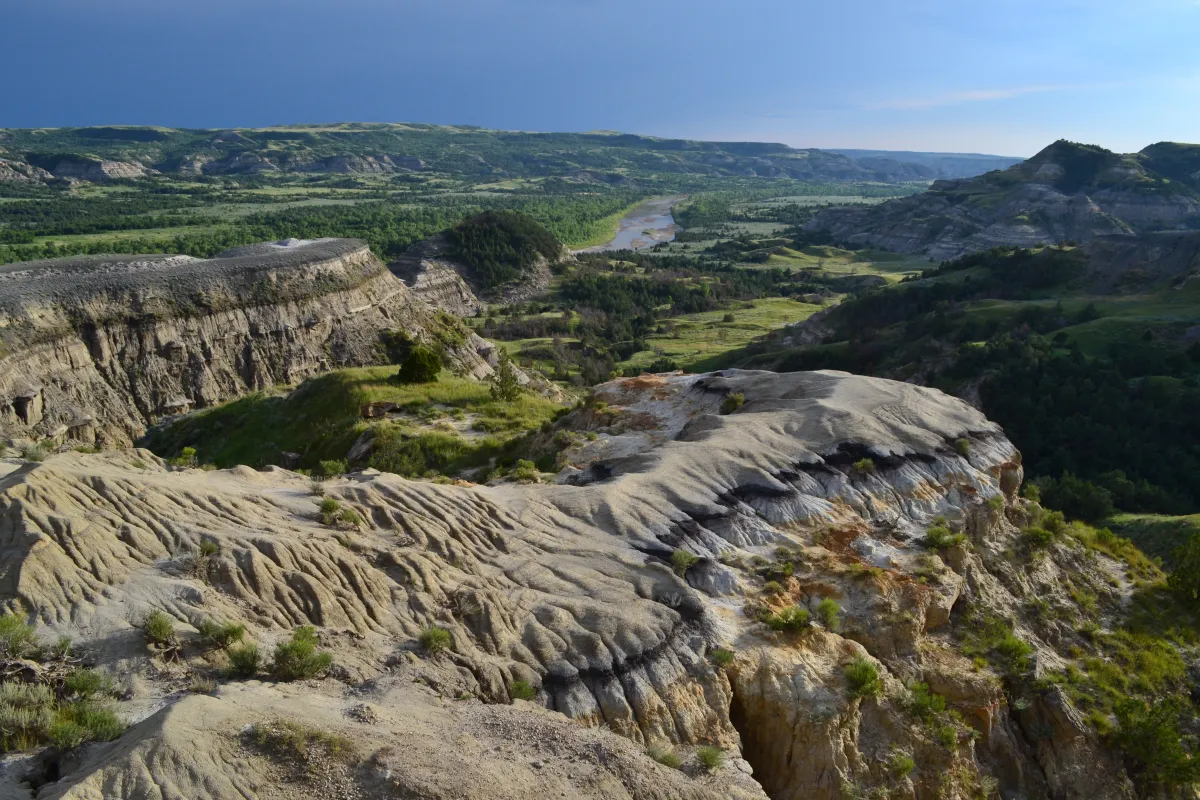
The real hiking in North Dakota is the Dakota Prairie Grasslands, badlands and buttes stretched across the western half of the state in every direction you look, further than you would guess from the highway. It is a lot more ground than the state's reputation lets on.
It does not pull the crowds Theodore Roosevelt does, and a leashed dog is welcome on every trail in it, no special exceptions to keep straight.
Expect wide open country, striped clay hills and long sightlines, more like Montana than the flat image most people carry of North Dakota before they actually visit and see it for themselves in person.
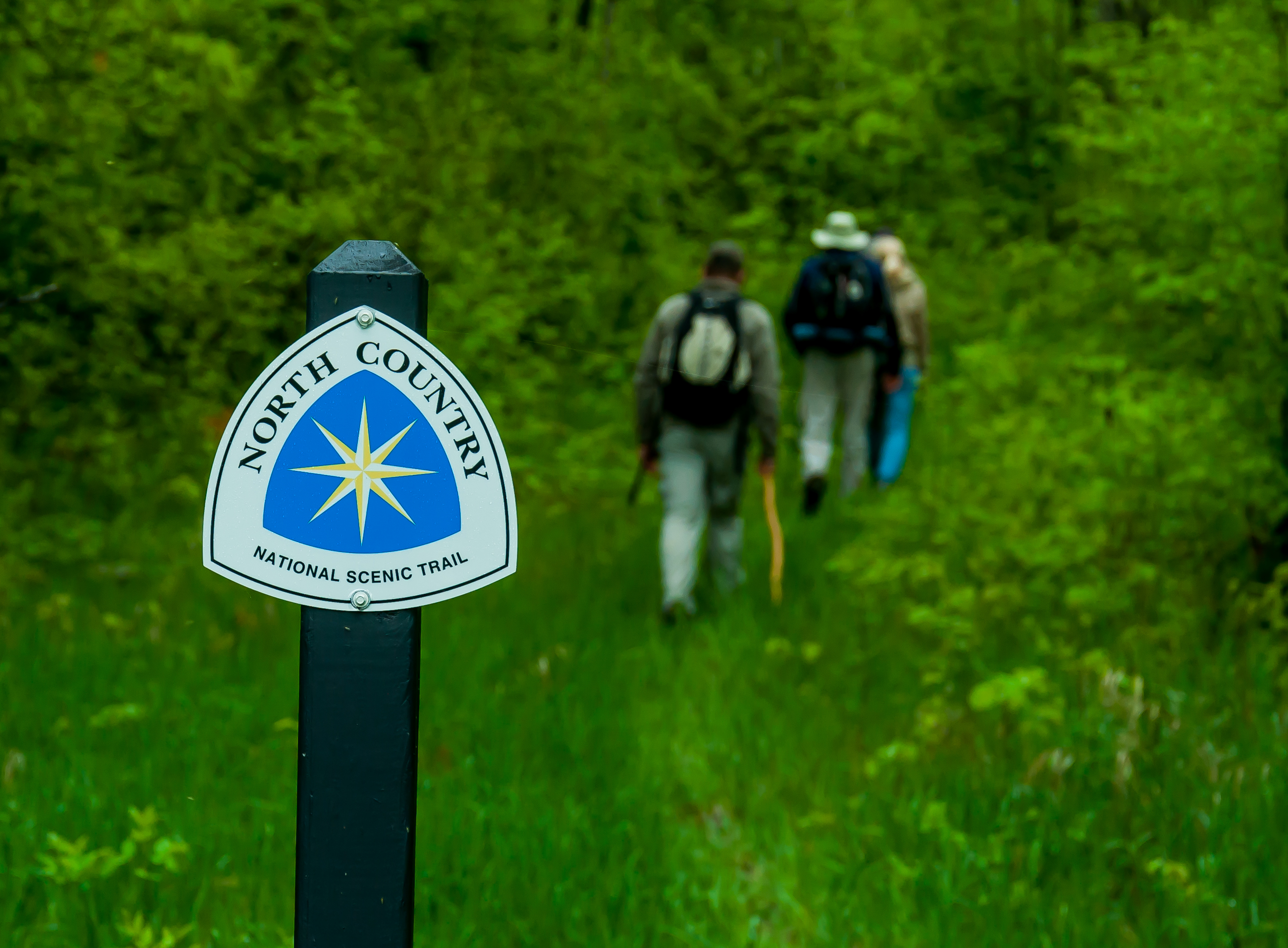
The North Country National Scenic Trail threads through part of the state too, if you want something longer than a day hike and do not mind a lot of open sky overhead. It is a quiet stretch of a very long trail.
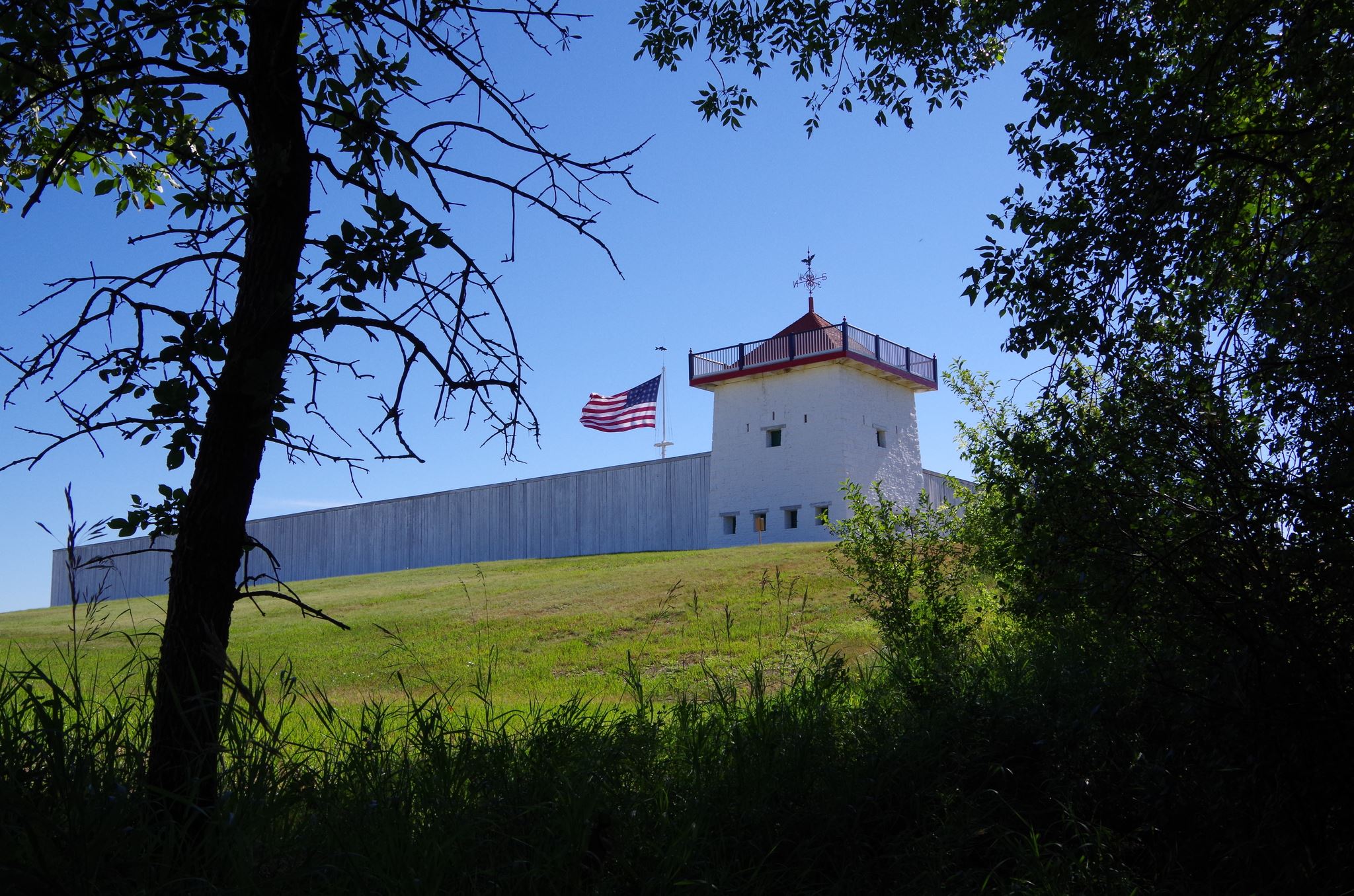
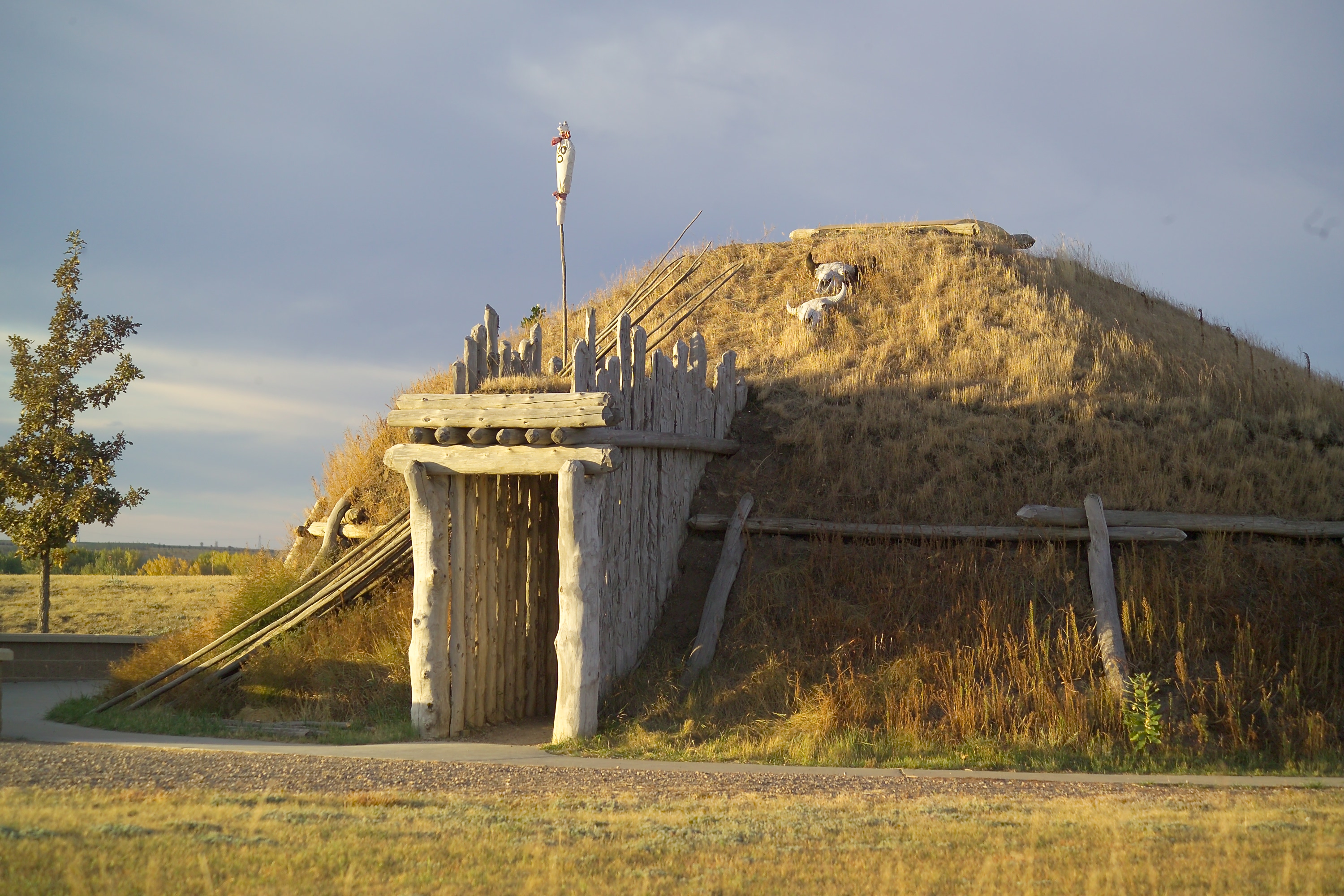
Fort Union Trading Post and Knife River Indian Villages give you two easy, historic walks along the Missouri River bottomlands, both open to your dog and both worth an hour of your day.
Neither historic site is much of a workout, but both are worth the stop if you are already headed that direction and want a break from driving the long stretches between towns.
Keep the 6-foot leash on in developed spots and your dog under control on the trail, and that one rule covers the whole state, no exceptions county to county.
Theodore Roosevelt National Park is worth the stop for the badlands views and the bison, just leave the real hiking to the grassland next door. Dogs there stay on roads, overlooks and campgrounds only.
The state parks fill in the rest, close to home and easy on a weekday afternoon when a full grassland trip is not in the cards for the day.
So plan your dog days around the Little Missouri grassland, not the park. You get the same badlands scenery and a lot more trail underfoot.
North Dakota only has the one national park to know about, and the rule there is straightforward once you hear it explained.
Theodore Roosevelt National Park allows no dogs on any trail. Roads, overlooks and campgrounds stay open, so plan on scenery there and save the real miles for the grassland right next door.
National monuments, historic sites, recreation areas, and other Park Service land in North Dakota, often more open to a leashed dog than the headline parks.
National forests and grasslands, broadly the friendliest federal land for a leashed dog.
National wildlife refuges in North Dakota. These protect animals first, so dogs are often limited to certain trails or kept out, but a few welcome a leashed dog.
Most North Dakota state parks welcome leashed dogs on the trails, which makes the state system the easy, everywhere answer here. Yes. Most North Dakota state parks welcome leashed dogs on trails.
The most-visited North Dakota state parks, each checked for its own dog rule.
Late spring through fall is the window in North Dakota, with hot summers and hard winters bookending it on both sides of the calendar.
The badlands offer almost no shade, so carry water and start early once summer heat sets in, especially on the exposed buttes with nothing to block the sun.
Rattlesnakes turn up in the grassland's warm months, so watch where your dog noses around in the rocks and the low brush along the trail.
The gumbo clay out here turns to slick, sticky muck after rain, so give the trails a day or two to dry before you go, or plan on cleaning a lot of paws.
Winter comes early and stays serious, so plan your last hikes of the year before the wind turns hard and the cold sets in for good.
Wind is a constant on the open grassland, so a calm-looking day can still feel a lot colder than the number on your phone would suggest, dog included.
Mountain trails mean long days, cold water crossings, and real elevation, so pack for control and endurance.
Every rule here comes straight from the agency that runs the land, the National Park Service, the Forest Service, the BLM, or the North Dakota state park system, and each place is date-stamped on its own page. Dog policies change with the season and the site, so use this to plan and always confirm on the official page before you load up the car. More on how we check it in our methodology.
Skip the park's trails and hike the grassland instead. Same badlands, same quiet, and your dog actually gets to walk it.
Yes. North Dakota has 15 verified federal and state areas in this guide, and most of the state parks welcome leashed dogs on the trails. The national parks tend to be the strict ones, so those are listed separately below.
The national parks in North Dakota mostly hold dogs to paved areas, roads, and campgrounds rather than the trails. Each park page spells out exactly where a dog can go.
Yes. Most North Dakota state parks welcome leashed dogs on trails. Leashed dogs are generally allowed on trails, in campgrounds, and day-use areas across North Dakota State Parks.
The tightest rules are usually inside the national parks and around sensitive wildlife or water areas. Swim beaches, some nature preserves, playgrounds, and park buildings are typically off-limits. Rules vary by park.